
For homes
Homes here deal with hot attics and concentrated winter rain. Small failures spread fast on older decks, so yearly checks matter.
- Ceiling stain after rain
- Missing shingles after wind
- Gutters overflowing at fascia
Bell Gardens rain is concentrated in the winter months, and summer heat and UV work on a roof all year. Maintenance here is a seasonal rhythm: clear what holds water, reseal what has dried out, and catch a small failure before the first big winter storm turns it into a ceiling stain.
 Attic checkFlashing resealGutter clearing
On small lots with mature trees and close neighbours, debris does not just fall on your roof — it washes into shared drainage and neighbours' gutters too. Regular clearing protects the whole tight block, not only one house.
What this service covers here: Valley and gutter debris cleared so water can leave the roof; Flashing, pipe boots and sealants checked and resealed where they have dried or cracked; Loose fasteners and lifted tabs refastened before wind finds them.
Maintenance is for a roof that is basically sound but ageing, for a property between tenants, and for any roof that has not been looked at since before the last winter.
Our standard roof maintenance visit covers inspection, minor repairs, resealing, and cleanup. Major repairs and full replacement are quoted separately, and we tell you before any extra work begins. Here is what you get on a typical visit.
We walk the entire roof field and check the attic underside for stains, daylight, and damp insulation. This tells us whether a leak is active and where it is entering. Takes 30 to 50 minutes on most homes.
Cracked, lifted, or missing shingles and tiles get replaced with matched material.
Pipe boots, step flashing, counter-flashing, and vent seals get checked and resealed with roofing-grade sealant. Flashing failure is the most common leak source we find on Bell Gardens roofs.
We clear debris from valleys, gutters, and downspouts, then confirm water flows away from the roof edge. Clogged drainage backs water under the drip edge and rots fascia.
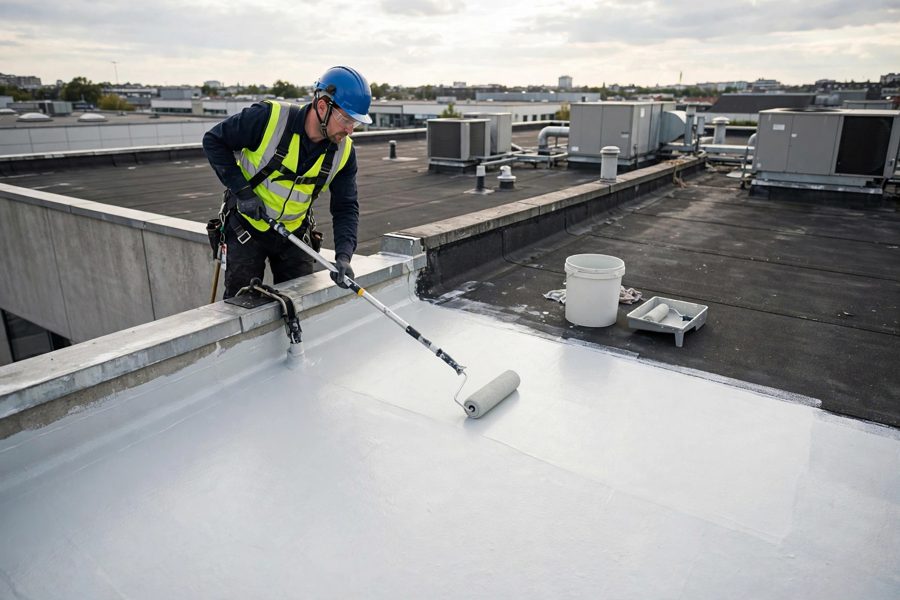
On flat roofs we check membrane seams, patch blisters, and clear drains and scuppers. Ponding water left standing will find a seam eventually, so we address it on every visit.
You get a summary of findings, repairs made, and items to watch, with photos of the work. If replacement is coming, we give you a realistic timeline instead of a sales pitch.
The approach is the same for a home and a business. What changes is the access, the schedule and who needs the paperwork.
Homes here deal with hot attics and concentrated winter rain. Small failures spread fast on older decks, so yearly checks matter.
Flat and low-slope roofs fail at seams and drains. Standing water and open laps are the two issues we see most on commercial buildings.
A plain-language look at what Roof Maintenance involves and when it is needed.
See how it worksRoof maintenance Bell Gardens CA is scheduled inspection and repair work that keeps an existing roof performing. We walk the field, check every penetration, and look at the things that fail first: pipe boots, step flashing, valley metal, and the sealant around vents. On asphalt shingles we replace lifted or missing tabs and reseal the ridge. On flat roofs we check for ponding water and blisters. It is not a replacement. It is the tune-up that buys you years.
Bell Gardens roofs take a specific beating. Summer heat pushes attic temperatures past 140 degrees, which cooks shingle adhesive and dries out sealant. Winter rain then finds every gap. Most of the homes we service sit in the 90201 ZIP code, where 1950s and 1960s construction means original sheathing and thin underlayment.
A roof tune-up finds and fixes the small failures that turn into interior water damage.
Every visit follows the same five steps. You get a written summary and photos before we leave.
We set a roofing ladder, tie off a safety harness, and walk the full field. We check ridge caps, field shingles, valleys, and every penetration. On flat roofs we check membrane seams and drains. This takes 20 to 40 minutes on a typical Bell Gardens home.
We go inside and look at the underside of the deck. Stains, daylight, and damp insulation tell us where water is actually getting in. We check attic ventilation and note any blocked soffit vents. This is where we confirm whether a leak is active or old.
We clear valleys, gutters, and downspouts. We sweep the roof with a nail magnet sweeper so no fasteners end up in your yard or driveway. On flat roofs we confirm drains flow and no water is standing after we rinse the surface.
You get a written summary of what we found, what we fixed, and what to watch. Photos show the before and after on every repair. If something is wearing toward replacement, we tell you plainly and give you a timeline, not a sales pitch.
Move across a circle, or focus it and press Enter, for an illustrative thermal view of the photograph.
Safe roof access on steep pitches. We tie off on every walk and use ladder stabilizers so the ladder does not damage gutters or siding.
Removing damaged shingles without tearing the surrounding field. Clean removal means the replacement shingle seats flat and seals properly.
Resealing flashing, pipe boots, and termination bars. We use roofing-grade sealant rated for UV and thermal movement, not hardware-store caulk.
Laying out straight courses on shingle repairs and setting nails at the correct height so shingle tabs seal without overdriving.
Sweeping the roof and ground after repairs so no fasteners end up in your yard, driveway, or lawn where tires and feet find them.
Thermal views are illustrative, generated from the photographs.
Cutting replacement sheathing and decking when we find rot, and driving fasteners on flashing and metal components.
Cutting flashing, drip edge, and valley metal to fit. Clean cuts mean tighter laps and fewer places for water to work in.
We follow National Roofing Contractors Association guidance on flashing laps, fastening patterns, and underlayment placement. Correct flashing detail is what keeps water out at walls, chimneys, and valleys.
When we replace shingles or underlayment, we install to the manufacturer's system specification so the roof performs as tested. That includes ice and water shield at valleys and eaves where the roof system specification calls for it.
We confirm every leak from inside the attic before we repair it. Water travels along framing, so the stain on your ceiling is rarely directly under the entry point. Tracing saves guesswork.
After sealing a leak, we run water over the repair area and watch from inside. If it stays dry, the repair is done. If not, we keep working until it does.
A homeowner in the Suva School Pocket notices a faint ceiling stain after the first big rain of the season.
We inspect the roof and attic, trace the water to a failed vent flashing, reseal it, and replace two cracked shingles nearby. The whole visit takes about two hours.
Outcome: The stain stops spreading, the repair is documented with photos, and the customer avoids a drywall and insulation job.
A property manager in Bell Gardens needs annual service on a flat-roof commercial building before winter.
We walk the membrane, clear drains and scuppers, patch two blisters, and reseal a termination bar that had pulled loose. A written report goes to the owner.
Outcome: The roof drains properly through the rainy season and the owner has documentation for their maintenance file.
A homeowner on the Gage Avenue Corridor is preparing to sell and needs the roof in presentable condition.
We do a full tune-up: replace missing shingles, reseal flashing, clear gutters, and provide a written condition report with photos that the seller can show buyers.
Outcome: The roof passes buyer inspection without negotiation surprises, and the sale moves forward on schedule.
A tile roof in the Clara Street / I-710 Pocket has slipped tiles and crumbling ridge mortar after years of heat.
We reset slipped tiles, re-bed and re-point the ridge, and check the underlayment condition from the attic side. We tell the owner honestly how many years the underlayment has left.
Outcome: The roof is watertight again and the owner has a realistic timeline for future underlayment replacement.
A homeowner in the Florence Avenue Corridor had a tree branch scrape the roof during a windstorm.
We inspect the damaged area, replace the affected shingles, check the surrounding field for lifted tabs, and clear the branch debris from the valleys and gutters.
Outcome: The damage is repaired before the next rain, and the customer has photos for their insurance file if needed.
Bell Gardens sits in the Los Angeles basin, which means hot, dry summers and a short, concentrated rainy season. Attic temperatures regularly exceed 140 degrees in July and August, and that heat cycles shingle adhesive and sealant until they fail. Then the winter rain arrives and finds every gap.
Much of the housing stock here dates to the 1950s and 1960s, with original sheathing and thin underlayment, so small failures spread faster than they would on a newer roof. We schedule most roof maintenance services Bell Gardens visits in early spring, before the heat, and again in late fall for homes with heavy tree cover.
If you have been searching for roof maintenance in Bell Gardens, California, the pattern is usually the same: a failed pipe boot or a lifted shingle tab that has been quietly leaking for months. Our crews work the Garfield Avenue Corridor and Eastern Avenue Corridor regularly and know which roof types show up where.
Before: A homeowner in central Bell Gardens had a spreading ceiling stain after winter rain. The pipe boot on the main plumbing vent had cracked and was letting water run down the vent pipe into the attic insulation.
After: We replaced the boot, resealed the surrounding shingles, and water-tested the repair. The stain stopped spreading within a day.
Check pipe boots every year. They are the single most common leak source we find on Bell Gardens homes, and replacement is quick and inexpensive.
Before: A four-unit building in Bell Gardens had ponding water on the flat roof and two open membrane seams. Drains were clogged with debris, and water was sitting within a few feet of the seams.
After: We cleared the drains and scuppers, patched two blisters, and heat-sealed the open seams. After rinsing, water drained off the roof within minutes with no standing water remaining.
Flat roofs need drain clearing twice a year and a seam check before the rainy season.
Before: A tile roof in the Darwell / Hannon / Gallant / Asmus–Jaboneria Pocket had six slipped tiles and crumbling ridge mortar after years of heat cycling. The homeowner was worried the whole roof needed replacement.
After: We reset the slipped tiles, re-bed and re-pointed the ridge, and inspected the underlayment from the attic. The roof is watertight, and the underlayment has an estimated five to seven years left.
Have tile roofs checked annually for slipped tiles and ridge mortar. Catching it early avoids both water damage and premature replacement.
Most roof failures start small and stay invisible until water is already inside. These are the issues we catch most often on Bell Gardens roofs.
Small repairs now prevent interior water damage later.
Most ceiling stains start as a failed pipe boot or a lifted shingle tab, not a worn-out roof. We find those points on a scheduled visit and seal them for a fraction of interior repair cost.
Asphalt shingles lose granules from UV exposure and thermal expansion. Replacing cracked tabs and resealing ridges keeps the field intact longer. On a typical 25-year architectural shingle, consistent annual roof tune-up Bell Gardens California service can push real service life toward 30 years.
Poor attic ventilation cooks shingles from underneath. We check ridge vents, soffit vents, and intake screens, then clear blockages. When air moves, deck temperatures drop and shingle adhesive lasts. That is preventative roof maintenance Bell Gardens near me customers schedule every spring before the heat arrives.
Clogged gutters back water under the drip edge and rot fascia. We clear debris, check hangers, and confirm downspouts run water away from the foundation. On flat roofs we check drains and scuppers so ponding water does not sit and find seams.
Clear records you can keep and share.
Before and after images of each repair
Written summary of what we found
What was fixed and what to watch
When to schedule the next check
Knowing which one your roof needs saves money and avoids surprises.
Routine service on a sound roof
Fixing an active problem
When the roof is worn out
Bell Gardens, CA 90201. Not listed? Call and ask: it only takes a minute.
Based in Bell Gardens. Pick a pocket for local details.
Typical 2026 pricing includes the full walk, minor repairs, resealing, and a written report. Larger repairs are quoted separately before we start.
A tune-up includes a full roof walk, attic inspection, replacement of cracked or missing shingles, resealing of flashing and penetrations, gutter and valley clearing, and a photo report. We also check attic ventilation and flat-roof drains. It does not include full replacement or major structural repair, which we quote separately if we find them.
Schedule once a year, ideally in early spring before summer heat. If your home has large trees nearby or you have had storm damage, twice a year is better. Roofs over 15 years old benefit most from annual service. We send a reminder when your next visit is due.
Zornex Key Roofers serves Bell Gardens and the surrounding Los Angeles County area, in Bell Gardens, CA 90201. We handle shingle, tile, metal, and flat roofs. Call +1 424 336 0888 to schedule a visit or ask about a roof maintenance plan Bell Gardens CA homeowners can set up on a yearly schedule.
Other services from the same team.
One visit now can save you a winter leak and an interior repair bill. Call Zornex Key Roofers at +1 424 336 0888 and we will schedule your roof tune-up in Bell Gardens, usually within five business days. Written findings and photos included.
Call us at +14243360888 — we are open 24 hours, every day. Tell us what you are seeing and we will bring the right tools.